
If you’ve been following this series, you now understand something many women are never told:
Your lymphatic system plays a central role in lipedema.
You’ve learned:
- Why lymphatic dysfunction worsens symptoms
- The signs of a sluggish lymphatic system
- And how daily habits can support lymph flow
But there’s one question many women eventually ask:
“Is there something that can help move this fluid more effectively?”
The answer is yes.
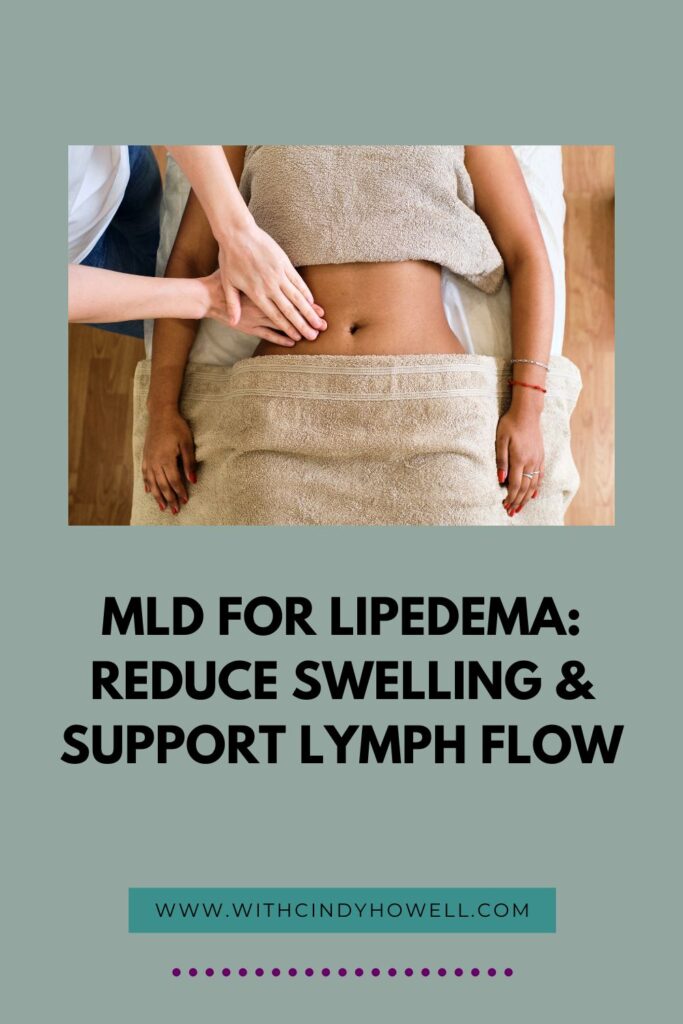
It’s called Manual Lymphatic Drainage (MLD).
And for many women with lipedema, it can be a game-changing part of their care.
What Is Manual Lymphatic Drainage (MLD)?
Manual Lymphatic Drainage is a gentle, specialized technique designed to support the movement of lymph fluid through the body.
It uses:
- Light, rhythmic strokes
- Specific directional movements
- Targeted pathways that follow the lymphatic system
This is very different from traditional massage.
MLD is not about deep pressure.
It’s not about working into muscle tissue.
It’s about stimulating the lymphatic vessels just beneath the skin to encourage fluid to move more efficiently.
Why MLD Is So Important for Lipedema
In lipedema, the lymphatic system is often overloaded and under-supported.
As we’ve talked about:
- Inflammation increases fluid leakage into tissues
- Lymph vessels can become compressed
- Fluid becomes trapped
- Swelling and pressure build over time
MLD helps by:
✔ encouraging fluid movement out of congested areas
✔ reducing tissue pressure
✔ supporting the body’s natural drainage pathways
✔ decreasing the burden on the lymphatic system
For many women, this can interrupt the cycle of:
inflammation → stagnation → more inflammation
What Women with Lipedema Often Experience
While everyone’s body is different, many women report feeling:
- Less swelling
- Reduced heaviness
- Improved comfort in their legs and arms
- A sense of lightness in their body
- Better mobility
- Improved body awareness
Some even describe it as:
“The first time my legs didn’t feel so full.”
That feeling matters.
Because when your body feels different, your entire day feels different.
Why Gentle Works Better
This is important.
Many women believe that more pressure = better results.
But the lymphatic system doesn’t respond to force.
In fact, aggressive techniques can sometimes increase inflammation or overwhelm already sensitive tissue.
MLD works because it is:
- Gentle
- Intentional
- Rhythmic
- Supportive of the body’s natural physiology
It meets your body where it is, instead of forcing it to respond.
Why Consistency Matters
One session can feel amazing.
But real, lasting benefits come from consistency.
Think of MLD as:
- Supporting a system that is already working hard
- Helping your body maintain fluid balance over time
- Reducing the overall burden on your tissues
This is why many women benefit from:
- Regular sessions
- Pairing MLD with daily habits (movement, hydration, nutrition)
- Ongoing support instead of one-time treatment
This is not about a quick fix.
It’s about supporting your body long-term.
The Benefit of In-Home Lymphatic Care
For many women with lipedema, getting to appointments can feel overwhelming, especially when dealing with swelling, fatigue, or discomfort.
This is where mobile lymphatic care can make a meaningful difference.
Receiving care in your own home allows you to:
- Stay relaxed and comfortable
- Avoid additional physical stress
- Be more consistent with your care
- Integrate sessions into your routine more easily
Healing doesn’t have to feel like another burden.
It can feel supportive, calm, and accessible.
Is MLD Right for You?
If you are experiencing:
- Persistent swelling
- Heaviness in your legs or arms
- Tissue tenderness
- That “full” or “stuck” feeling
- Limited progress despite lifestyle changes
MLD may be a helpful addition to your care plan.
It’s not about replacing everything you’re doing.
It’s about adding the missing piece.
A Gentle Invitation
If you’ve been wondering whether lymphatic support could help you…
I want you to know this:
You don’t have to figure it out alone.
This is exactly what I support women with every day — combining:
- Lymphatic care
- Education
- Lifestyle guidance
- And a deep understanding of lipedema
If you feel ready to explore what this could look like for you, I’d love to support you.
Or simply reach out and ask your questions. There’s no pressure, just support.
Final Thoughts
Your body is not working against you.
It is doing the best it can with the support it’s been given.
When you begin to support your lymphatic system, especially through tools like MLD: things can start to shift.
Not perfectly.
Not instantly.
But meaningfully.
And that’s what matters.
Your body just needs the right kind of support.
Supporting Your Wellness,
OX Cindy
Ready to take your journey to the next level? Join the private Facebook community for exclusive support, practical tips, and a group of women who truly understand. Let’s empower each other to thrive: click here to join! https://www.facebook.com/groups/7021999704562921/
What my FREE checklist: Top 5 Foods to Avoid for Managing Lipedema! Click there Link: https://withcindyhowell.com/checklist/
Looking for personalized guidance to manage lipedema? Work with me one-on-one to create a tailored plan that fits your unique needs and empowers your health journey. Click here to learn more and get started today! https://l.bttr.to/WaDwK
Free Lipedema Surgery Course:https://l.bttr.to/6cATB
Written by Cindy Howell, RN, CLT
Certified Lymphedema Therapist & Lipedema Support Coach
If you’ve ever noticed that your swelling increases during stressful seasons…
If your legs feel heavier when life feels heavy…
If pain, inflammation, fatigue, or cravings seem worse when you’re overwhelmed…
You are not imagining it.
And it’s not “all in your head.”
Stress creates real physiological changes in the body, and those changes can significantly impact lipedema symptoms.
One of the key players behind this connection is a hormone called cortisol.
Let’s break down why stress matters so much in lipedema, and how to support your body in a healthier way.
What Is Cortisol?
Cortisol is often called the “stress hormone.”
It’s produced by your adrenal glands and helps your body respond to challenge or perceived danger.
In the short term, cortisol can be helpful.
It helps you:
- Wake up in the morning
- Increase alertness
- Mobilize energy
- Handle acute stressors
But when stress becomes chronic…
When your body feels under pressure day after day…
Cortisol can stay elevated longer than intended.
And that’s where problems begin.
How Chronic Stress Increases Inflammation
One of the most important effects of chronic stress is increased inflammation.
When cortisol becomes dysregulated over time, it can contribute to:
- Immune imbalance
- Blood sugar swings
- Increased inflammatory signaling
- Poor recovery
- Greater pain sensitivity
For women with lipedema, where inflammation is already part of the condition, this matters deeply.
More inflammation can mean:
- Increased swelling
- More tenderness
- Greater tissue discomfort
- Symptom flare-ups
Stress Can Worsen Fluid Retention & Lymphatic Congestion
Stress doesn’t just affect mood.
It can also impact:
- Circulation
- Fluid regulation
- Breathing patterns
- Movement habits
- Digestion
Many women under stress notice they:
- Move less
- Sleep worse
- Crave inflammatory foods
- Hold tension in the body
- Breathe shallowly
All of these can reduce lymphatic flow and increase fluid stagnation.
Remember:
Your lymphatic system depends on movement, breathing, and nervous system balance.
When stress is high, lymphatic support often goes down.
Why Your Legs May Feel Heavier During Stressful Times
Many women say:
“When I’m stressed, my legs feel so much worse.”
There’s a reason.
Stress can increase:
- Water retention
- Inflammation
- Pain sensitivity
- Muscle tension
- Nervous system overload
The result?
More heaviness.
More discomfort.
More fatigue.
Your body isn’t betraying you.
It’s responding to stress physiology.
Stress, Cravings & Blood Sugar Swings
Chronic stress can also drive cravings, especially for quick energy foods.
This often means:
- Sugar cravings
- Carb cravings
- Emotional eating
- Energy crashes
These foods may temporarily soothe stress but can worsen inflammation and fluid retention for many women.
This is not a lack of discipline.
It’s biology.
When the nervous system is dysregulated, the body seeks relief.
Stress Impacts Sleep (And Sleep Impacts Lipedema)
Stress and poor sleep often travel together.
When sleep declines, we commonly see:
- More inflammation
- Poor blood sugar control
- Increased hunger hormones
- Lower pain tolerance
- Worse recovery
This creates another loop:
Stress → poor sleep → worse symptoms → more stress
Understanding this cycle is powerful because cycles can be interrupted.
The Body Needs Safety to Heal
This may be one of the most important truths in your lipedema journey:
A stressed body struggles to heal.
Healing doesn’t require perfection.
But it does require support.
When your nervous system feels safer, your body often responds with:
- Better fluid regulation
- Lower inflammation
- Improved digestion
- Better sleep
- More resilience
How to Support Stress & Cortisol Naturally
You do not need to eliminate all stress.
You need to increase recovery signals.
Here are simple ways to begin:
Deep Breathing Daily
Slow diaphragmatic breathing helps shift the nervous system out of fight-or-flight.
Gentle Movement
Walking lowers stress hormones and supports lymphatic flow.
Balanced Nutrition
Protein, healthy fats, and stable meals help regulate blood sugar and cortisol.
Morning Light
Natural light exposure supports healthy circadian rhythms.
Sleep Protection
Create a consistent bedtime rhythm.
Lymphatic Support
MLD, self-care, and body-based support can calm both body and mind.
Boundaries
Sometimes reducing stress means saying no more often.
A Gentle Reminder
If your symptoms worsen during stressful times…
That does not mean you are failing.
It means your body is responding exactly as a human body responds under pressure.
The goal is not to shame yourself.
The goal is to support yourself.
Stress management is not a luxury in lipedema care.
It is part of the plan.
Final Thoughts
Your body is always communicating.
When stress rises and symptoms flare, it’s not punishment.
It’s information.
And when you learn to calm inflammation, support your nervous system, and care for your lymphatic health…
Everything can begin to feel different.
In the next blog, we’ll talk about another often-overlooked topic:
Why your body needs safety, rest, and consistency more than intensity.
You are not broken.
You are adaptive.
And support changes everything.
Supporting Your Wellness,
OX Cindy
Ready to take your journey to the next level? Join the private Facebook community for exclusive support, practical tips, and a group of women who truly understand. Let’s empower each other to thrive: click here to join! https://www.facebook.com/groups/7021999704562921/